Dear Sir/Madam,
https://www.change.org/p/refer-lucy-letby-s-case-back-to-the-court-of-appeal?
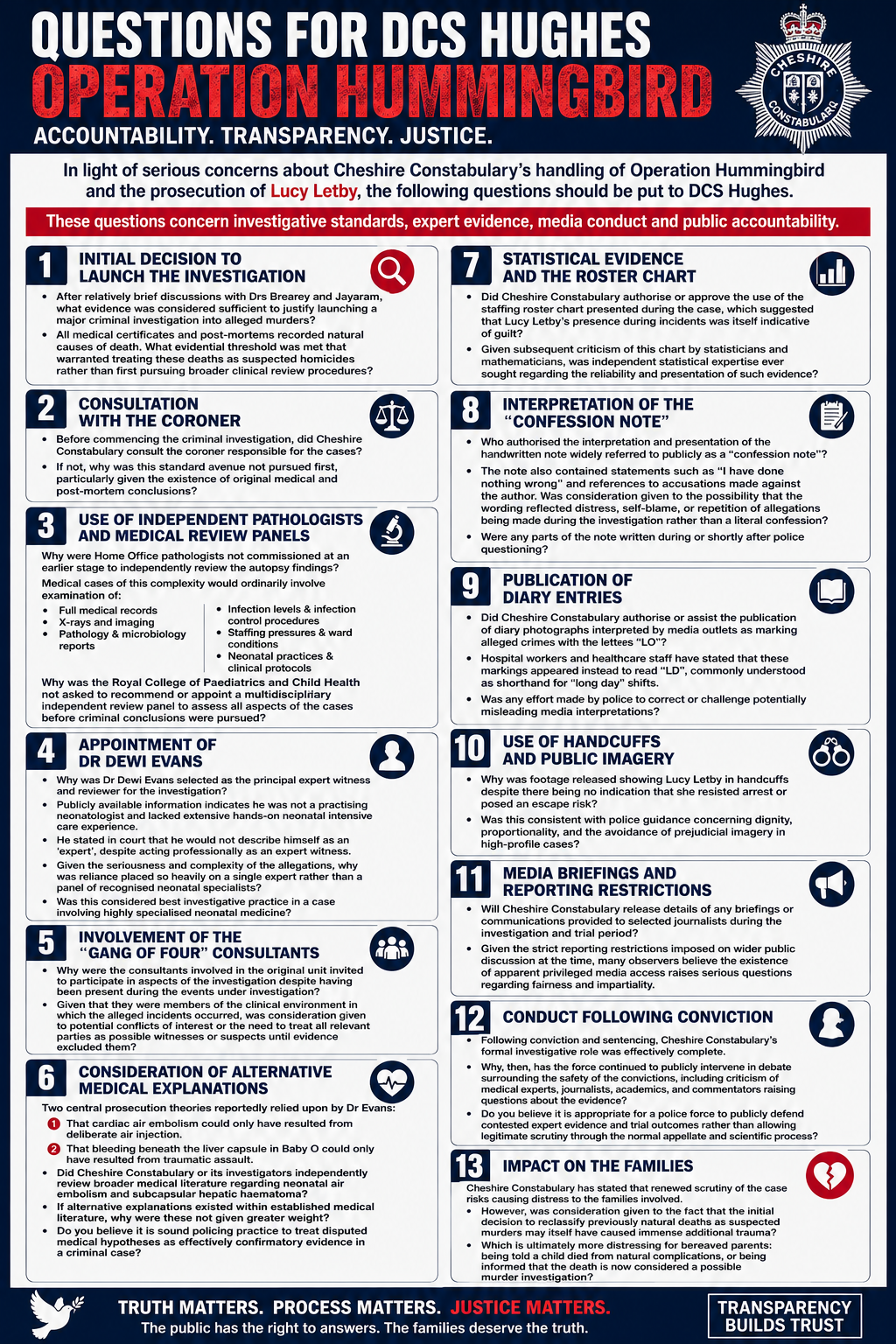
In light of recent public discussion surrounding Operation Hummingbird, including criticism raised by politicians and commentators regarding the handling of the investigation, I would be grateful if the following questions could be put to DCS Hughes.
The purpose of these questions is to seek clarity regarding investigative procedures, evidential standards, expert selection, media conduct, and wider issues of public accountability.
- Initial Decision to Launch the Investigation
Following relatively brief discussions with Dr Stephen Brearey and Dr Ravi Jayaram, what evidence was considered sufficient to justify the launch of a major criminal investigation into alleged murders?
At the time the investigation began, medical certificates and post-mortem findings reportedly recorded natural causes of death in the cases concerned. Given this, what evidential threshold was met that warranted treating the deaths as suspected homicides rather than first pursuing broader clinical review procedures?
- Consultation With the Coroner
Before commencing the criminal investigation, did Cheshire Constabulary consult the coroner responsible for the cases?
If not, why was this standard avenue not pursued first, particularly given the existence of original medical and post-mortem conclusions?
- Use of Independent Pathologists and Medical Review Panels
Why were Home Office pathologists not commissioned at an earlier stage to independently review the original autopsy findings?
Medical cases of this complexity would ordinarily involve extensive examination of:
- Full medical records
- X-rays and imaging
- Pathology and microbiology reports
- Infection levels and infection-control procedures
- Staffing pressures and ward conditions
- Neonatal practices and clinical protocols
Why was the Royal College of Paediatrics and Child Health not asked to recommend or appoint a multidisciplinary independent review panel to assess all aspects of the cases before criminal conclusions were pursued?
- Appointment of Dr Dewi Evans
Why was Dr Dewi Evans selected as the principal expert witness and reviewer for the investigation?
Publicly available information indicates that Dr Evans was not a practising neonatologist and did not possess extensive hands-on neonatal intensive care experience. He also later stated in court that he would not describe himself as an “expert,” despite acting professionally as an expert witness following retirement.
Given the seriousness and complexity of the allegations, why was reliance placed so heavily upon a single expert rather than a broader panel of recognised neonatal specialists?
Was this considered best investigative practice in a case involving highly specialised neonatal medicine?
In addition, before appointing Dr Evans, did Cheshire Constabulary carry out any background review into his publicly expressed views, published commentary, or previous conduct as an expert witness?
There are publicly available reports and online material alleging that Dr Evans previously expressed controversial views regarding the decriminalisation of certain sexual acts involving minors. Whether accurate or not, was this information known to the force at the time of his appointment, and if so, why was it not considered relevant when assessing his suitability to act as the lead expert in such a sensitive and high-profile criminal investigation?
https://www.ukcolumn.org/
https://corruptionspotlight.
If this information was not known at the time, what due diligence procedures were undertaken before appointing him?
- Involvement of the “Gang of Four” Consultants
Why were the consultants involved in the original unit invited to participate in aspects of the investigation despite having been present during the events under investigation?
Given that they were members of the clinical environment in which the alleged incidents occurred, was consideration given to potential conflicts of interest or the need to treat all relevant parties as possible witnesses or suspects until evidence excluded them?
- Consideration of Alternative Medical Explanations
Two central prosecution theories reportedly relied upon by Dr Evans included:
- That cardiac air embolism could only have resulted from deliberate air injection.
- That bleeding beneath the liver capsule in Baby O could only have resulted from traumatic assault.
A review of published medical literature and standard online medical resources appears to show that both conditions can arise from a range of non-criminal causes in neonates.
Did Cheshire Constabulary or its investigators independently review broader medical literature regarding neonatal air embolism and subcapsular hepatic haematoma?
If alternative explanations existed within established medical literature, why were these not given greater weight during the investigation?
Do you believe it is sound policing practice to treat disputed medical hypotheses as effectively confirmatory evidence in a criminal case?
- Statistical Evidence and the Roster Chart
Did Cheshire Constabulary authorise or approve the use of the staffing roster chart presented during the case, which suggested that Lucy Letby’s presence during incidents was itself indicative of guilt?
Given subsequent criticism of this chart by statisticians and mathematicians, was independent statistical expertise ever sought regarding the reliability and presentation of such evidence?
- Interpretation of the “Confession Note”
Who authorised the interpretation and presentation of the handwritten note widely referred to publicly as a “confession note”?
The note also contained statements such as “I have done nothing wrong” and references to accusations made against the author. Was consideration given to the possibility that the wording reflected distress, self-blame, or repetition of allegations being made during the investigation rather than a literal confession?
Were any parts of the note written during or shortly after police questioning?
- Publication of Diary Entries
Did Cheshire Constabulary authorise or assist the publication of diary photographs interpreted by media outlets as marking alleged crimes with the letters “LO”?
Hospital workers and healthcare staff have stated that these markings appeared instead to read “LD,” commonly understood as shorthand for “long day” shifts.
Was any effort made by police to correct or challenge potentially misleading media interpretations?
- Use of Handcuffs and Public Imagery
Why was footage released showing Lucy Letby in handcuffs despite there being no indication that she resisted arrest or posed an escape risk?
Was this consistent with police guidance concerning dignity, proportionality, and the avoidance of prejudicial imagery in high-profile cases?
- Media Briefings and Reporting Restrictions
Will Cheshire Constabulary release details of any briefings or communications provided to selected journalists during the investigation and trial period?
Given the strict reporting restrictions imposed on wider public discussion at the time, many observers believe the existence of apparent privileged media access raises serious questions regarding fairness and impartiality.
- Conduct Following Conviction
Following conviction and sentencing, Cheshire Constabulary’s formal investigative role was effectively complete.
Why, then, has the force continued to publicly intervene in debate surrounding the safety of the convictions, including criticism of medical experts, journalists, academics, and commentators raising questions about the evidence?
Do you believe it is appropriate for a police force to publicly defend contested expert evidence and trial outcomes rather than allowing legitimate scrutiny through the normal appellate and scientific process?
- Impact on the Families
Cheshire Constabulary has stated that renewed scrutiny of the case risks causing distress to the families involved.
However, was consideration given to the fact that the initial decision to reclassify previously natural deaths as suspected murders may itself have caused immense additional trauma to those families?
Which is ultimately more distressing for bereaved parents: being told a child died from natural complications, or being informed that the death is now considered a possible murder investigation?
I would appreciate a response to these questions in the interests of transparency, accountability, and public confidence in the handling of major investigations.
Yours faithfully,
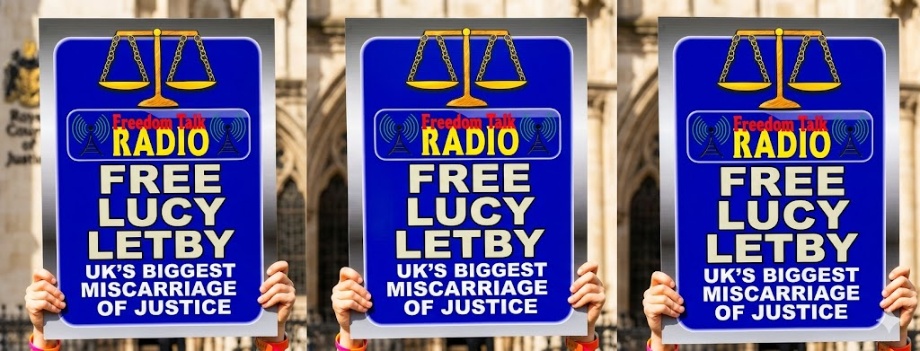
A miscarriage of justice occurs when an unfair, improper, or erroneous outcome happens in a criminal or civil proceeding, most commonly referring to the wrongful conviction of an innocent person. It represents a failure of the judicial system, often involving flawed evidence, coerced confessions, or systemic failings, which can lead to life-altering consequences for those involved