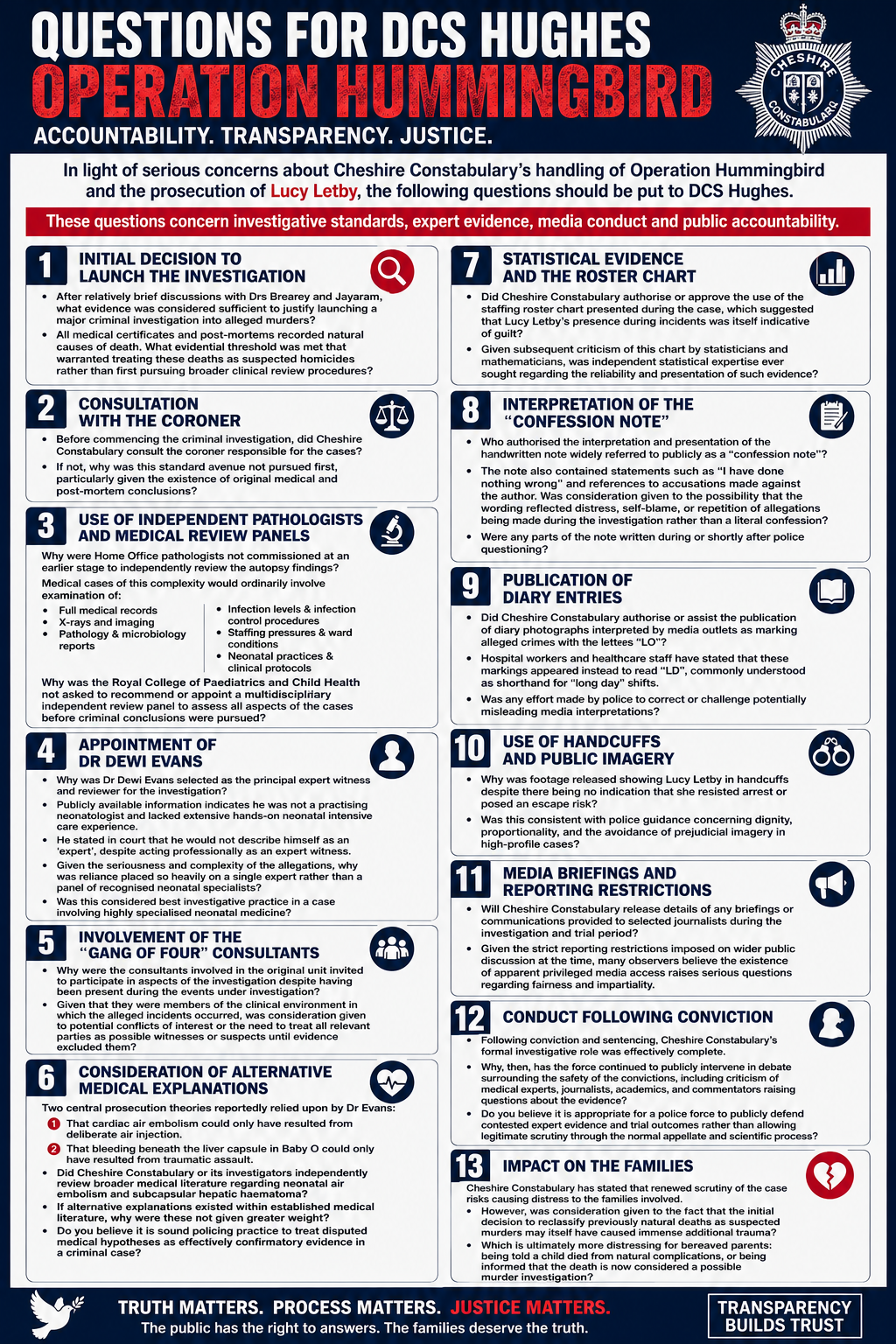
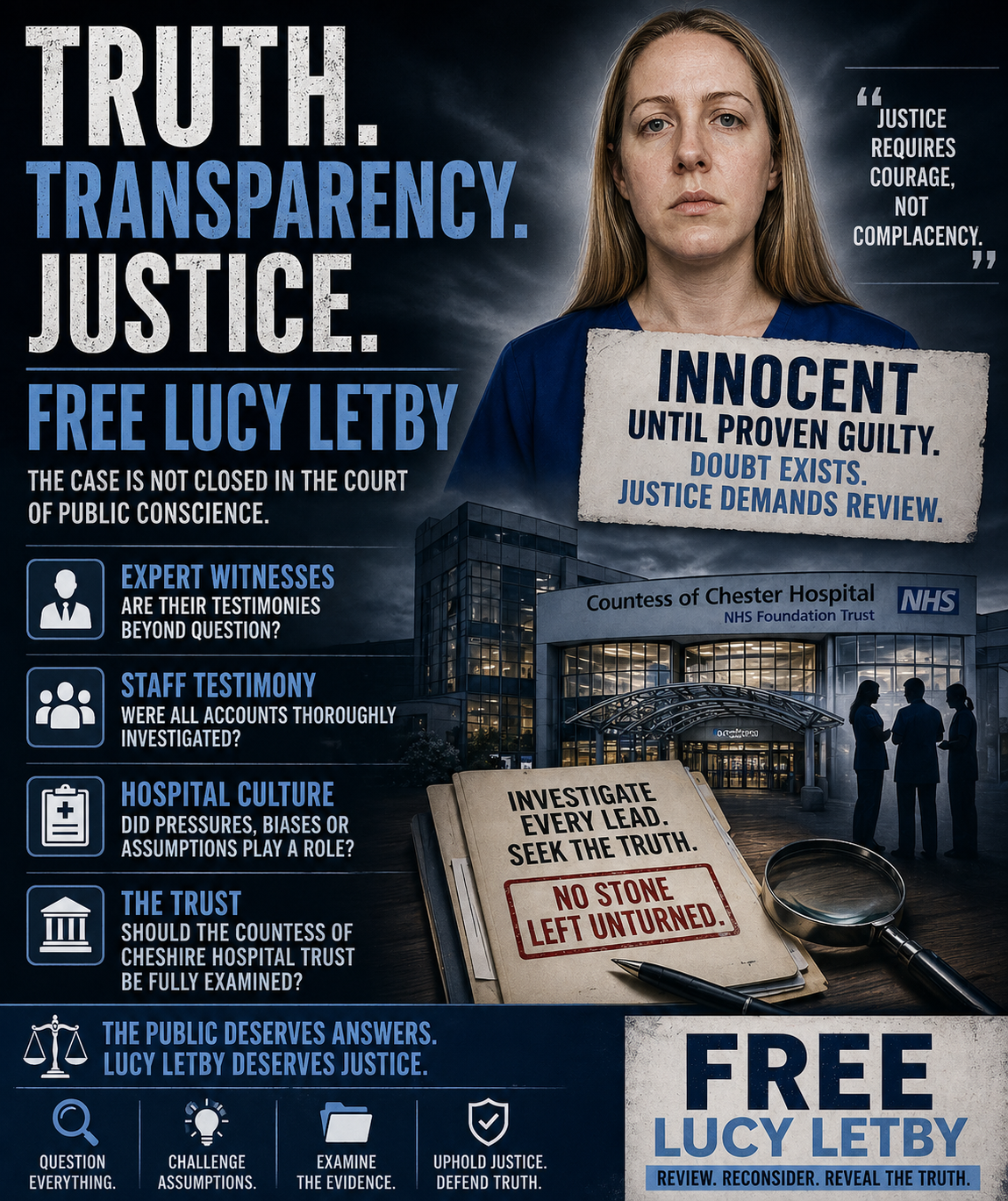
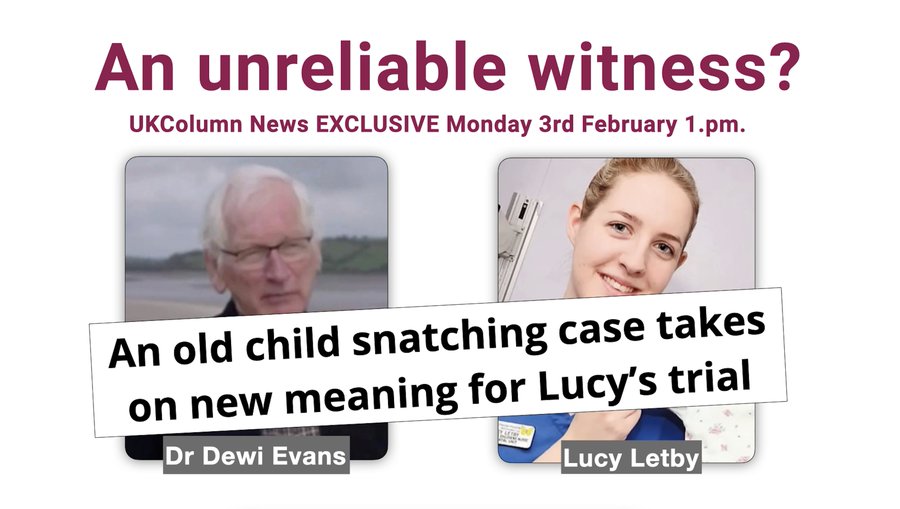
The involvement of Dr. Dewi Evans in the historic Bonnie Linda Lewis case (also referred to as the Bonnie Lewis “kidnapping” or removal case) has recently been revisited in light of his role as the chief prosecution expert in the Lucy Letby trial.
- Background: The case involved the removal of child Bonnie Lewis from her mother, Linda Lewis, with Dr. Dewi Evans involved in the allegations of fabricated illness or “Munchausen syndrome by proxy”.
- Controversy: Critics have pointed to this historic case as a pattern of behavior regarding Dr. Evans’ role as an expert witness, suggesting he was part of a group of experts who supported controversial allegations of child abuse in the 1990s and early 2000s.
- The Link to Lucy Letby Case: The investigation into the Bonnie Lewis case has been revisited by critics following the conviction of Lucy Letby, questioning Dr. Evans’ history of using, or supporting the use of, Munchausen by proxy allegations in legal settings.
- Association with Other Experts: The case involved other prominent child protection figures from that era, such as Roy Meadow.
Cases of Sudden Babies Death.
United Kingdom – Prof Roy Meadow
Professor Sir Roy Meadow was a prominent British paediatrician and a leading expert on child abuse. His reputation was severely damaged due to his role as a prosecution expert witness in several wrongful trials concerning child death, by presenting himself as an expert in statistics, which is outside of his field of expertise.
The most infamous case is the prosecution of Sally Clark. Where her two sons died of sudden infant death syndrome (SIDS) – an unexplained death the occured in babies below one, which is a rare event. Meadow testified that the odds of two SIDS happening naturally were 73,000,000:1, by squaring the probability of 8,500:1 for SIDS in affluent non-smoking families. He also argued that two SIDS will happen once every hundred years. In November 1999, Sally Clark was convicted of murdering his two sons.
The Royal Statistical Society later pointed out that Meadow’s statistical approach was fundamentally flawed, and “the calculation leading to 1 in 73 million is false”. In essence, he treated two SIDS in the same family as independent events. However, there are strong reasons to suggest that SIDS is related to genetics and environmental factors. Hence not independent at all.
Sadly, for Sally Clark, a solicitor, it has been a devastating ordeal. Her conviction was overturned after serving three years in prison. However, she developed severe psychiatric problems and died from alcohol poisoning in March 2007.
The case of Sally Clark prompted the Attorney General Lord Goldsmith to review hundreds of cases concerning murder by parents or carers. Cases have been identified and reopened as a result.
These cases collectively remind us that child death cases are extremely sensitive, often provoking intense public emotion, yet the courts must steadfastly adhere to the principle of relying on objective medical and scientific evidence. Only when the evidence is complete, and all other reasonable possibilities have been excluded, can a guilty verdict be returned. This principle both safeguards the right to a fair trial and ensures that the truly guilty are appropriately punished while the innocent are not wrongly convicted.
The case of Lam Lam, Lucy Letby, and Sally Clark highlights the complex interface between medicine and law, especially when complex medical evidence is relied upon in child homicide cases. While these cases are heinous, misinterpreted evidence could result in a grave miscarriage of justice. Striking a delicate balance between child protection, punishing for crimes and ensuring a fair trial remained a major challenge in the modern criminal justice system.
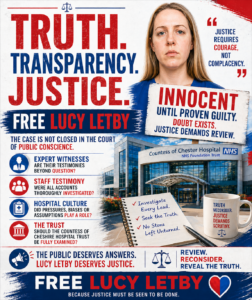
Dewi Evans, Lucy Letby Expert Witness, Called for Decriminalising Sexual Acts with Children?
- Role in Letby Trials: Dr. Evans was a key prosecution expert in the Lucy Letby trials, identifying air embolism as a cause of death.
- Criticism of Expertise: Letby’s defense team challenged his expertise, arguing he failed to act with the independence required, and that he had limited experience with air embolisms.
- Concerns on Child Protection Procedures: Critics argue that cases like Bonnie Lewis show a pattern of “malicious” or unsubstantiated allegations against mothers.
Senior Lucy Letby hospital boss arrested.
https://www.bbc.co.uk/news/articles/c5ylnvpg3l9o
News
Lucy Letby: Key medical witness in trial was under investigation by his employers.
https://www.bmj.com/content/392/bmj.s561
UK COLUMN Discusses DR Evans and the linda lewis case.
https://citizenscybercourt.wordpress.com/wp-content/uploads/2012/01/008-the-estranged-daughter.pdf
Bonnie and Linda Lewis 1996.
“Bonnie” (not her actual forename, owing to reporting restrictions) Lewis was the twelve-year-old daughter of Linda Lewis, living in Neath Port Talbot. In November 1996, Bonnie was in considerable pain and attended several hospitals in South Wales over a period of months. Doctors were initially unable to correctly diagnose her illness, but eventually settled on appendicitis. They removed her appendix but to no effect; in fact the operation caused an abscess that almost killed her. She was treated and the abscess healed but she was still in pain and without a diagnosis. Twice Bonnie was prescribed huge overdoses of drugs, which were refused by the pharmacist and her mother respectively. Bonnie was discharged from hospital without a diagnosis. Social Services became involved. Bonnie was still in pain but managing to attend school. In July 1997, Evans attended a social services case conference and said there was nothing wrong with Bonnie but that her mother “has problems”. Evans said the mother suffered from the syndrome “attention seeking by proxy” – a diagnosis he was not qualified to make – and essentially blocked her from taking independent medical advice.[19][better source needed]
The Full Story. Linda Lewis Campaign.
https://www.facebook.com/JusticeForLindaLewis/
In 2023, a new petition—P-06-1331 “Full Public Inquiry into the Linda Lewis Case”—was submitted to Senedd Cymru. As of 2025, it remains under review, though committees have stated that they cannot consider matters that fall under active court orders.
Linda Lewis, now in her seventies, continues to campaign publicly for access to her daughter and for the release of official records relating to the 1998 removal.
The evidence ref Dr Evans.
Sunday, 28 August 2011
” Oh what a tangled web we weave when first we practice to deceive.” Dr Dewi Evans exposed as liar, perjurer,falsifier of evidence and instigator in the kidnapping of an innocent child.

Below is a letter dated the 27th of March 1998 from Dr Dewi Evans a former paediatrician in Singleton Hospital Swansea that was sent to Ms Lyn Berlyn of Neath Port Talbot County Borough Council Social Services.
It is well known and has been proven that the ” Illegal Kidnapping ” of Linda’s daughter from her hospital bed in America at gunpoint was instigated on false and fraudulent grounds using false and fraudulent information deliberately manufactured by Doctors , Social Workers , The Police and the local newspaper The South Wales Evening Post.
Dr Dewi Evans played a major part in the continual misdiagnosis and mistreatment of Linda’s daughter and is a prominent conspirator in this miscarriage of justice and medical cover up.
It is also worth noting that at the time of the “illegal kidnapping” in 1998 by agents of Neath Port Talbot Social Services. Dr Dewi Evans was himself an elected Councillor of Neath Port Talbot County Borough Council and in 1992 stood in the General Election for the constituency of Neath for Plaid Cymru.
This raises several professional ” conflicts of interests ” that both Dr Dewi Evans and others have deliberately ignored and broken the law.
Such was the desperation of the guilty to cover up for their errors by fabricating and falsifying statements and evidence to protect themselves.
The letter from Dr Dewi Evans to his OWN Councils Social Services is made up of three pages.
In page one below below ( Pages 2 and 3 are just as damning and will be dealt with at a later date. )

Dr Dewi Evans in his own words states,
” It is pleasing to read the opinion of the doctors in Florida. They were quite categorical in establishing a diagnosis of Munchausen syndrome by Proxy without receiving any information from any centre in the UK.”
WellDr Evans if what you state in the above is true then please can you explain the following sworn affidavit ( below ) from Miss Lori Fiorino of the Department of Children and Families in Florida.


https://www.facebook.com/watch/?v=1004701484750749
Some questions then for Dr Dewi Evans.
In your letter of 27th of March 1998 you have stated that
” It is pleasing to read the opinion of the doctors in Florida. They were quite categorical in establishing a diagnosis of Munchausen syndrome by Proxy without receiving any information from any centre in the UK.”
then please explain why the sworn affidavit from Lori Fiorino on the 16th of February 1998 above which starts off
“On the 12th of February 1998 the Department of Children and Families received and “abuse report ” alleging that N ****** had been diagnosed with Munchausen Syndrome by Proxy in her native country of Wales.
So how did they get this report Dr Evans ? Who sent this false and fraudulent information to the American Authorities ?
As you know Munchausen Syndrome by Proxy was never an issue as far as Linda’s daughter was concerned. If it was why did you prescribe such vast quantities of drugs to her daughter if she was feigning illness ? Some of them are pictured below

and why did you prescribe 80mgs of Oral Morphine to N****** supposedly for her pain ?
You also issued a Discharge Letter on 30/3/97 without stating any diagnosis.You knew that there WAS something seriously wrong with N******.
http://cllrkevinedwards.blogspot.com/2011/07/medical-negligence-1-x-60mg-super.html
This all proves that you and other have lied, perjured yourselves and fabricated evidence to set up a time scale and a false cover story so that on the 18th of February 1998 Social Workers from Neath Port Talbot County Borough Council where you were a Councillor could illegally remove Linda’s very sick daughter from her hospital bed in America to cover up for yours and others medical negligence in the UK.
One day you will have to answer to God for what you have done. He may forgive you.
Many of us never will.
Kevin
The above evidence is released under Public Interest Law” and the fact that ” NO INJUNCTION CAN EVER BE TAKEN OUT TO COVER UP FOR CRIMINAL ACTS.”
Dewi evans and claire roberts.
https://www.ihrdni.org/096-022.pdf
https://www.bbc.co.uk/news/uk-northern-ireland-48717338
Death of Lindsay Angela Alvarez 2009.
In 2009, Lindsay Angela Alvarez from Dundonald, County Down was admitted to hospital with brain swelling. She later died from the complications of salt poisoning. An Inquest into the death was held in 2014. Evans was called as an expert witness and stated to the inquest that it was unusual for a child to get fractured ribs and that he couldn’t rule out that she might have been thrown down the stairs. The inquest had previously been told that the child had fallen down carpeted stairs in her uncle’s flat two weeks prior to her death. The inquest was halted and a report was sent to Public Prosecution Service.[7] The Public Prosecution Service ruled out prosecution in 2015 and the inquest was brought to a close.[8]
Uncle avoids prosecution over autistic girl’s death
https://www.irishnews.com/tags/lindsey-angela-alvarez/
Appeal in the removal of children from parental care 2015.
In 2015, the High Court of Appeal, Northern Ireland heard an appeal relating to the Family Court where two children had been judged to have been the subject of non-accidental injury in Care Proceedings and removed from the care of their parents. Evans had been one of the expert witnesses. The appeal was uphel
[14] By the time he came to give his oral evidence Dr Evans had been shown
photographs of the ear taken on 20 and 21 September. On that basis he shifted his
opinion and moved away from agreeing that they were non-accidental.
[15] In his judgment the trial judge was critical of Dr Evans, suggesting that his
evidence should have been more considered and structured than in fact it was.
———————————————————————————————-
Death of a five-month-old baby 2017.
Evans was an expert witness in the 2021 murder trial of a man later convicted of killing his five-month-old daughter,[10] being able to rule out pneumonia as a potential cause of death in favour of a blunt force brain injury.[
Dr Dewi Evans, a consultant paediatrician, told jurors that Summer Peace had developed the condition after her collapse.
The five-month-old was rushed to hospital on September 8, 2017, after she became unresponsive and struggled to breathe.
https://www.bbc.co.uk/news/uk-england-birmingham-56210036
Two people jailed for deliberately and violently shaking babies to death had their murder convictions quashed by the court of appeal today while a third saw his conviction reduced to manslaughter.
Three judges in London ruled that the presence of three classic features of so-called shaken baby syndrome – swelling of the brain, bleeding between the brain and skull, and bleeding in the retina of the eyes – did not automatically lead to a conclusion of unlawfully killing or injury.
https://www.theguardian.com/society/2005/jul/21/childrensservices.childprotection
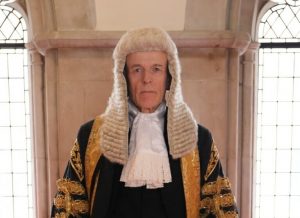
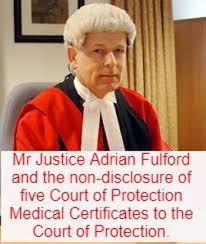
Appeal court judge now retired in this case.
CAN WE TRUST ADRIAN FULLFORD ?
https://en.wikipedia.org/wiki/Adrian_Fulford
Lord Adrian Fullford.
https://psychiatricabuse.org/judiciary.html
Misdiagnosed and drugged, the true story of Leonard Lawrence
https://en.wikipedia.org/wiki/List_of_prisoners_with_whole_life_orders
===============================================
Baby murder trial 2018
Did Dr Evans Break The Rules?
The retired paediatrician testified as an expert in a case in 2018 when he was not licensed to practice by the GMC.
https://www.mephitis.co/post/did-dr-evans-break-the-rules
https://www.dailyecho.co.uk/news/17269039.doctor-claims-bite-baby-death-intentional/
Dr DEwi email exchange ref Lucy letby case.
https://www.mephitis.co/post/my-correspondence-with-dr-dewi-evans
Doctor’s notes were ‘deplorable’
http://news.bbc.co.uk/1/hi/northern_ireland/foyle_and_west/8330685.stm
Lucy Letby case.
Comments by Lord Justice Jackson 2022
In 2022, Evans had written a report used in an application for permission to appeal to the Civil Division of the Court of Appeal in care proceedings. The Court of Appeal judge Lord Justice Jackson rejected the appeal on grounds that Evans’s report was “worthless” and that he made “no effort to provide a balanced opinion”.[12][13] In a November 2024 podcast interview with John Sweeney, Evans criticised Lord Justice Jackson’s comments.[14][15]
Evans has stated that the Letby case was his most difficult as expert witness. He stopped taking on new cases in February 2023.[3]
Three months into the murder trial at Manchester Crown Court they applied to exclude the evidence of retired consultant paediatrician Dewi Evans.
Dr Evans was tasked by Cheshire Police to look at a series of collapses on the neonatal unit of the Countess of Chester Hospital in 2015 and 2016.
He wrote a number of reports about his findings and went on to give evidence from last October onwards about many of the children that Letby was said to have harmed.
———————————————————————————————-
Lucy Letby case: the problems with expert evidence.
https://theconversation.com/lucy-letby-case-the-problems-with-expert-evidence-249309
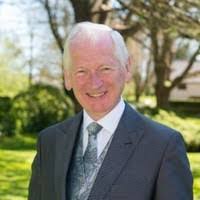
Dewi Richard Evans (born July 1949) is a retired British consultant paediatrician and professional expert witness. He is a fellow of both the Royal College of Physicians and the Royal College of Paediatrics and Child Health. During the 1980 and 1990s, he helped develop the maternity unit in Singleton Hospital, Swansea.[citation needed]
Beginning in 2022 he rose to prominence as lead expert witness for the prosecution in the Lucy Letby trial.
Letby prosecution expert: Police must set record straight on baby’s death.
DEWI EVANS PAEDIATRIC CONSULTING LIMITED
Company number 07341254
https://find-and-update.company-information.service.gov.uk/company/07341254/officers


Politics
Dr Evans has been described as a longstanding member of Plaid Cymru, and in 2019 stood unsuccessfully to be national chair of the party. He also stood for the party at a 1991 by-election and again at the 1992 general election, but was not elected on either occasion. [43]

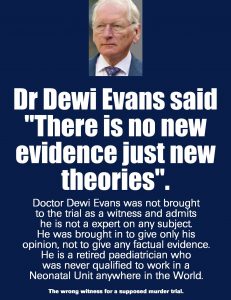
Dr. Dewi Evans is a very strange man: a summary of some concerns
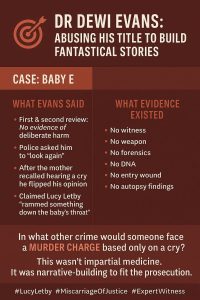
Dr. Dewi Evans is a very strange man, and alongside the accused, he was the central witness in perhaps the most disturbing serial murder trial in England’s history.
I am in neither camp in this case, except that I do think there is potentially a basis for reasonable doubt. I have no idea whether Lucy Letby actually harmed any babies. I think only she will ever know that – and even she may not be sure herself.
I will say that if I were in the pro-guilt camp, I really would want somebody from Cheshire Police or the CPS to have a ‘quiet word’ with Dr. Evans and very firmly tell him to shut his trap. Over the past year since the verdicts, he has become an embarrassment to the prosecution case. There is a saying: discretion is the better part of valour, the relevance of that here being that while it is brave to confront difficulties and challenges, sometimes it is wiser to keep your head down and steer away from it.
There is another piece of wisdom he should heed. When your ears are burning, it’s tempting to respond, but sometimes it really is better to ‘maintain a dignified silence’ and say nothing. He really should have said nothing at all to the media and just let his evidence do the talking.
Some of the broad concerns I have about him encompass both the man himself and the substance, such as it is, of his evidence at trial.
(i). I am confused about what exactly Dr. Evans’ role was at trial because he is actually on record denying that he was an expert witness. During cross-examination concerning the death of Baby A, he stated: “I call myself an independent medical witness, not an expert”. This is very confusing because Dr. Evans was not being called on by the prosecution to give evidence as a witness of fact. This was the trial of a criminal case against Lucy Letby, not an inquiry into the police investigation itself. Just to be clear, medical doctors often are called as witnesses of fact in all sorts of legal cases, including criminal trials, where they can give factual evidence or some interpretation of evidence relevant to the trial. This is common where someone concerned with the case is or was a patient of the doctor. In this capacity, the doctor is acting as a ‘professional witness’, which is a type of witness of fact. Is this what Dr. Evans means, so that he was a professional witness on behalf of the police? The problem is that Dr. Evans did not treat any of the patients (the babies), therefore he was not in a position to provide first-hand evidence as would be expected from a witness of fact.
I’ve noticed that the phrase ‘skilled witness’ has crept into English legal lexicon. This suggests a distinction between an expert, being one possessing an extraordinary knowledge of a field or specialism, and a skilled person, who can practice or perform the relevant field or specialism. But really, we are not talking about boilermaking here. What is the use to the court in this case of a skilled witness in the matter of neo-natal medical care? Probably minimal, because that was not the evidence needed. An expert was required.
The Court of Appeal repeatedly refers to Dr. Evans throughout its written judgment as a medical expert, both directly and in allusion – see amongst others paragraphs 4, 15, 24, 32, 33, 34, 35, 36, 37, 38, 98, 99, 102, 104, 106, 107, 108, 110, 112, 114, 115, 116, 118, 119, 122, 128, of this link: https://www.judiciary.uk/wp-content/uploads/2024/07/R-v-Letby-Final-Judgment-20240702.pdf .
Paragraph 24 of the judgment refers to Dr. Evans this way:
“Dr Evans remained the lead expert throughout the investigation and trial.”
I agree with the Court of Appeal. The only conceivable capacity in which Dr. Evans could participate would be as an expert witness, yet he tried to suggest that he was not an expert. If he was not an expert, then what was his role in the trial and why was his evidence put before the jury at all and later relied on by the judge when summing-up for the jury, and later still by the Court of Appeal?
(ii). The claim to be ‘independent’ is not supported by the facts, especially as viewed with the benefit of hindsight, having seen Dr. Evans’ disposition from right after the first trial. Dr. Evans knows that he was embedded in the police investigation and the police depended on him for their detective conclusions. Some of this is not in itself unusual. It has long been the case that experts for the prosecution will have been involved in liaison and co-operation with police officers often from an early stage. But his evidence was pivotal to the whole case: without him, there is nothing. In a real sense, he was the prosecutor and he knows that his work at the investigative stage was not blind reviewed. He willingly agreed to be called as an expert witness, thus advising the court, yet some of these cases rested on his opinions alone. Then, after the convictions, he decided to act as a partisan defender of the prosecution in the media and even suggested that Lucy Letby was responsible for more deaths that should be investigated. These are not the actions of an independent, sceptical, measured, rational expert to the court, but of a partisan person. His recent media statements give the impression, fairly or not, of someone who is still partisan and trying to make the evidence fit a conclusion.
(iii). Paragraphs 100 and 101 of the Court of Appeal judgment set out critical comments about Dr. Evans’ practice as a medico-legal expert, including scathing comments from a judge of the Court of Appeal (Civil Division), Jackson LJ. I have defended Dr. Evans on this point, because he averred under oath that he had only acted as advisor to a party in the litigation, not as an expert witness, however the comments are still damaging to Dr. Evans and of some relevance because they do accord with concerns expressed about him in this case. It could well be that in defence of his conduct in the appeal case dealt with by Jackson, LJ, Dr. Evans was telling the truth as he saw it but that in fact he had misunderstood the situation because he does not fully understand his role as a medico-legal expert and has a tendency to overreach and become partisan and dogmatic, something picked up on by Jackson, LJ.
(iv). Without wishing for this to get too personal, if the prosecution or the defence in a murder case are going to have a crucial expert witness at trial, I’d like it to be a boring person. An eccentric is forgivable if he’s brilliant, but brilliance was not required here. Medicine is hard, but it is not nuclear physics or quantum mathematics. You don’t need to be particularly intelligent to do it. The nature of the expert evidence was pretty ordinary. The issues are only whether it is credible and how the opposing side challenge it. Dr. Evans does not pass the Boring Test. He is colourful and somewhat narcissistic, an attention-seeker. He is a political animal. He seems to enjoy being interviewed on TV and radio and by the press. He likes being the centre of attention. While serving as an elected councillor, he once said that sex with children should be decriminalised. These things worry me. Does Dr. Evans really have the right temperament for an expert witness?
(v). In his media appearances, Dr. Evans presents as too partisan for my liking and too certain in his opinions. He is a believer in Lucy Letby’s guilt, which I find obnoxious, not because I hold any strong view on Lucy Letby’s guilt or innocence, but because I think his stance conflicts with his professional role. He was not appointed to the jury, so it is not for him to have a declared opinion on such matters. His role was that of medico-legal expert, specifically to advise and assist the court by providing an expert clinical opinion on causes of death and harm, based on his knowledge and past experience in the treatment of neo-natal babies and the management of neo-natal units, and his post-retirement experience as an expert forensic reviewer of paediatric cases generally. This does not extend to giving us his tuppence worth on whether she did it or not. He is of course quite entitled to his opinion, but it should remain private. By making his opinion public, especially in the manner he has done, he has in effect been seen to usurp the jury. It almost implies he was there in court as a prosecution advocate, persuading the judge, jury and anybody who would listen that Lucy Letby was guilty as sin, but that was not his role.
(vi). Why does he need to go on the airwaves and in print to defend his evidence? His evidence at trial either stands up to scrutiny based on present medical knowledge or it does not. If his evidence was strong, why would he need to go to so much effort to defend it? If the convictions are sound, Lucy Letby is going nowhere. The whole thing has that sense of a Shakespearean trap about it. It’s as if he is projecting his own insecurities in a very public manner. Of course, in his defence we should remember that if public allegations are not responded to in a public manner, they can often dominate a publicly-accepted narrative irrespective of truth. I am not suggesting that Dr. Evans should be expected to roll-over. He is a professional man and has the right to guard his reputation – up to and including engaging defamation lawyers, if necessary and if he is so inclined – my criticism is more about the way he has gone about this, in that he has reinforced the criticisms, especially the issue of his role at trial and whether he confined himself to his proper duties to the court. He has raised more questions than he has answered.
Three former senior leaders at the NHS hospital where the neonatal nurse Lucy Letby worked have been arrested on suspicion of gross negligence manslaughter.
Letby debate: ‘Terrifying when a single opinion condemns a young woman to life’
Letby debate: ‘Terrifying when a single opinion condemns a young woman to life’
Three former bosses of UK nurse Lucy Letby, convicted of killing babies, arrested on suspicion of manslaughter
https://edition.cnn.com/2025/07/01/europe/lucy-letby-case-arrests-manslaughter-intl
https://www.bmj.com/content/390/bmj.r1374
https://www.itv.com/watch/lucy-letby-beyond-reasonable-doubt/10a6860a0001B
Dewi Richard Evans (born July 1949) is a retired British consultant paediatrician and independent medical expert witness, whose role as lead independent expert medical witness for the prosecution in the Lucy Letby trial brought him to mainstream public attention.[1][2]. He earned a Bachelor of Medicine, Bachelor of Surgery (MB, BCh) from Cardiff University, a Diploma of the Royal College of Obstetricians and Gynaecologists, and became a Member of the Royal College of Physicians (1975). He was awarded Fellowship of the Royal College of Physicians in 1992, and in 1997 awarded a Fellowship of the Royal College of Paediatrics and Child Health in recognition of his work.
Within the medical community, he is known for his role as Clinical Director of Paediatrics and Neonatology at the Singleton Hospital in Swansea, and his role in the development of neonatal intensive care services and maternity services during the 1980s and 1990s in Wales.[3][4]
Evans has campaigned for better funding and improvement of pediatric, neonatal, and maternity services in Swansea and across Wales,[5][6][7] including public support for a Welsh registry of child abuse victims.[8]
Early life and education
Evans was bought up as a native Welsh speaker,[3][1] in a traditional dairy farming family, as one of two children. He attended a local primary school, moving on to Queen Elizabeth Grammar School Carmarthen where he was fast-tracked through his O-Levels and A-Levels, graduating at 16.[3]
Having successfully applied to Cardiff University School of Medicine, he began his medical training at the age of 17, “too young” in his own view[3]. He graduated with a Bachelor of Medicine, Bachelor of Surgery (MB, BCh) in 1971. Upon graduation, he was able to secure junior training in adult medicine at Morriston Hospital, followed by surgery and obstetrics, and eventually paediatrics.[3][1][2]
He secured a postgraduate job at Ysbyty Athrofaol Cymru, after which he worked at Alder Hey Children’s Hospital, before returning to Cardiff to earn his Diploma of the Royal College of Obstetricians and Gynaecologists (DobstRCOG) in 1973, and Membership of the Royal College of Physicians (MRCP) in 1975, enabling him to apply for consultant positions.[1] He was made a Fellow of the Royal College of Physicians (FRCP) in 1992, recognising his achievements in the field and in 1997 he was awarded a Fellowship of the Royal College of Paediatrics and Child Health (FRCPCH) in further recognition of his work.[9][1]
He secured a consultant post at the Singleton hospital at the age of 30. [10][3]
Career
Junior doctor
After graduation 1973, Evans began working as a junior doctor at Ysbyty Athrofaol Cymru, his training took him to Alder Hey Children’s Hospital as a registrar (1974–1976), and back to Cardiff (1977–1979), as a senior registrar, to complete his training.[1][non-primary source needed]
Consultant paediatrician
From 1980 to 2009, he held the post of full-time clinical consultant paediatrician at the Morriston and Singleton Hospitals in Swansea, both managed by Bwrdd lechyd Prifyshgol Bae Aberawe and part of GIG Cymru, where he led the development of neonatal intensive care services and maternity services.[3][4]
In interviews, he has said that during his years as a junior doctor he realised care for neonatal babies was “pretty poor”, babies who were “born prematurely or born ill, tended to die, and there wasn’t the experience, the expertise, the equipment, the knowledge to do a lot about this.” he found the state of the service in Wales and the country as whole very similar. As a result, he, along with fellow doctors and nursing colleagues, set about growing the neonatal unit until they became a nationally recognised neonate care facility in around 1990 and moved from Morriston to a purpose built facility at the Singleton Hospital.[3]
Clinical director of paediatrics and neonatology
Evans served two spells as Clinical Director of Paediatrics and Neonatology at the Singleton Hospital (1992–1997) and (2004–2008). His areas of special interest included paediatric endocrinology and childhood diabetes.
Evans retired from Bwrdd lechyd Prifyshgol Bae Aberawe and GIG Cymru in 2009 after 29 years as a consultant, and 36 years as a doctor.
Independent medical witness
He describes his entry into the medico-legal world as being “purely by chance”. Around 1988[1] a colleague from Northern Ireland, Brian Gibbons, sought advice on behalf of a family suing their local hospital after professional negligence caused one of their twin babies to be born dead, and the second with cerebral palsy and quadriplegia.[3][1] The case, Dunne v National Maternity Hospital, was influential on Irish tort law as it laid out the six core rules for assessing medical negligence; these became known as “Dunne principles”.[11]
After a drawn-out process of “trial by ambush”, as the solicitors for the plaintiff described it, they were able to win a substantial settlement for the family. Following this case, as word of mouth spread, Evans found himself on the register of expert witnesses, and in demand. He ultimately “prepared more than 500 medico-legal reports”, for the courts, and has given evidence in court in all three of the United Kingdom’s legal systems.[1] In addition he has provided evidence to a number of public inquiries including the Inquiry into Hyponatraemia-related Deaths,[9][12] and appeared regularly in the civil and criminal courts for both the defence and prosecution during the following four decades.[3]
In interviews, Evans described his medico-legal practice as having three kinds of cases:-
“Most of my cases during my substantive clinical practice involved allegations of clinical negligence, where I acted mainly for the claimant. I have prepared numerous cases for the family court, where one functions as a ‘joint expert’ acting for all the participants; local authority, guardian for the child, and representatives for the parents, and be independent of all of them. My third group of cases involves preparing reports involving suspected criminal activity. I have been involved in numerous cases where I have acted for the prosecution (via the police) and for the Defence approximately 50% each.“[1][10][3]
Following his 2009[1] retirement from Bwrdd lechyd Prifyshgol Bae Aberawe and GIG Cymru Evans continued to appear in various legal settings across the United Kingdom as an independent medical witness, joining the National Crime Agency register of expert witnesses around 2014.[2][3][10] Many of his cases, as they had during his medical career, involved child abuse, murder,[13] clinical negligence, and professional negligence.[14]
In February 2023, he stopped taking new cases. This was almost 50 years after obtaining his first post in paediatrics. He considers his first and last cases to have been his most challenging.[1]
Cases as an expert witness
Lucy Letby
In 2017[2], during the police investigation into the Lucy Letby case, Evans was instructed to review clinical records of the babies in the unit who had died or collapsed suddenly and unexpectedly – in total 61 cases. Evans produced numerous reports for Cheshire Police including a general statement dated 17 April 2019, a review of published literature regarding air embolus in newborn infants dated 3 July 2019 and a series of reports concerning the events surrounding the deaths and unexpected collapses of babies.[15][non-primary source needed]
Letby’s trial opened on 10 October 2022 and Evans remained lead expert witness during the ten-month proceedings, which are thought to be the longest murder trial in British history.[16][17] Supporting expert testimony was delivered by consultant pathologist Andreas Marnerides, professors of radiology Owen Arthurs and Stavros Stivaros, professor of haematology Sally Kinsey, professor of endocrinology Peter Hindmarsh, and consultant paediatrician Simon Kenney.[18][19][20][21][22][23][24]
Evans’ conclusions were peer-reviewed by Sandie Bohin a practising consultant neonatologist from Guernsey[25], at the request of Cheshire Police. Her role, was to “to provide a robust clinical review of Evans’ opinions, setting out whether she agreed or disagreed with him and, as appropriate, to provide an alternative causation for the collapse”.[15] Bohin also appeared as a main witness for the prosecution at the trial[25]. An additional peer-reviewer, consultant neonatologist Martin Ward Platt, had been part of the early case but died three years before the trial commenced.[26][3]
The case, Evan’s written evidence, and his role as a key expert witness has generated considerable public controversy despite the fact that Mr Justice Goss, and the Court of Appeal affirmed his credibility as a doctor and witness[15]. Notable critics include retired general practitioner and opinion columnist Phil Hammond, retired neonatologist Shoo Lee, and Sir David Davis.[27] Some parents of the deceased children have reacted with anger to their criticisms and perceived grandstanding[28].
Motion to rule further evidence inadmissible
On 9 January 2023[2][15], Ben Myers KC filed a motion to have further evidence from Evans ruled inadmissible before the defence commenced its case, in contravention of Criminal Practice Direction 2023 point 7[29] which requires such matters to be dealt with before the trial commences. The matter was also subject to ‘Count 1’ of the appeal. In the final appeal judgement [15] Dame Victoria Sharp et alia notes (paragraphs 111-122,), in support of Justice James Goss original ruling:-
“With respect to Mr Myers, it is unarguably the case that Dr Evans was suitably qualified – or to put it another way, it is not arguable that he lacked the necessary expertise – to give evidence. That is the case whether one examines his professional qualifications and background, or the evidence he gave about this during the course of the trial.“
“This tends to suggest that the real bone of contention was not Dr Evans’ qualifications or competence per se (matters that otherwise could and should have been addressed pre-trial) but concerned the way in which he gave his evidence. (emphasis from source) further noting “It was also material that there was other expert evidence which supported Dr Evans’ conclusions (indeed as the prosecution asserted, almost all of Dr Evans’ opinions were corroborated by another expert)”
The basis of the motion was that in 2022, Evans wrote a letter to the firm of solicitors involved in a civil appeal in the family court, being heard before Lord Justice Jackson. While not being a formal expert report or witness statement, the solicitors offered the text as evidence in an application for permission to appeal without Evans “knowledge or consent”, Jackson found the text offered “worthless”.[30][15][3]
Dame Victoria Sharp et alia also noted that Evans’ purported evidence in the case overseen by Lord Justice Jackson had been misrepresented:
“We should note finally, that after the judge’s ruling of 10 January 2023, Evans was asked about the observations of Jackson LJ in cross-examination. The effect of Evans’s evidence, and we summarise, was that the criticisms made in the decision were based on a false premise. The report was not an expert report prepared for the court or a witness statement; rather, it was a letter to the solicitors in the care case, and had been used by the solicitors (for the purposes of the application for permission to appeal) without his knowledge or consent. Further, he had not known of the decision before it was brought to his attention by the prosecution. Everyone in this trial (i.e. that of the applicant) had seen the decision before he did.”[15]
In a November 2024 podcast interview with John Sweeney, Evans stated that he “disagreed” with Lord Justice Jackson’s comments and thought he was “wrong to have made them”.[10][31]
Allegations Evans changed his mind about cause of death
In December 2024, after the final appeal had been issued and the judicial case permanently closed, Lucy Letby’s barrister Mark McDonald, while conducting a press conference, claimed that “Remarkably, Evans has now changed his mind on the cause of death of three of the babies: Baby C, Baby I and Baby P.” further claiming that this was contained in a report delivered to police, and “despite numerous requests” [that the prosecution had] “yet to give this report to the defence”. He went on to claim he would seek to appeal Letby’s convictions on the grounds that the expert evidence was flawed; no application to the Court of Appeal was forthcoming, and no document has emerged.[32]
The Crown Prosecution Service (CPS) said the Court of Appeal had previously rejected Letby’s argument that expert witness evidence presented by the prosecution had been “flawed”. Evans described the allegation as “remarkable, baseless, and incorrect”.[33]
Dunne v National Maternity Hospital
Dunne v National Maternity Hospital was a legal case from Ireland, heard in the Supreme Court of Ireland in Dublin.
Catherine Dunne presented to the National Maternity Hospital on 20 March 1982; she was pregnant with twins, and had gone into labour two weeks ahead of her estimated date of delivery. It was the routine practice in that hospital at the time to only monitor the heart rate of one of the two twins during labour in a multiple pregnancy, on the assumption that one twin’s heart beat was a reliable proxy for the other.[34] The first twin was born naturally six hours after Dunne arrived at the hospital, but shortly afterwards the second twin was born dead with signs of skin maceration. Over subsequent days, it became clear that the first twin had sustained severe brain damage, resulting in an irreversible quadriplegia and mental handicap.
The case had a significant influence on Irish tort law, in that it laid down the six core rules for assessing medical negligence. This was also the first case in which Evans’ provided medico-legal evidence.[1]
Reggie Phillips death
Evans was an expert witness in the 2018 murder trial of Doulton Phillips and Alannah Skinner.[35][36] Medical experts, including Evans, were able to identify 53 separate injuries to the young child along with a pattern of abuse in the days leading up to the boy’s death. Evans told the court “he thought the injuries pointed to Reggie being “hurled by the leg” and his head “smashed against a hard surface” shortly before dying.” Phillips was convicted and sentenced to 15 years for murder, and Skinner 30 months for neglect.[13]
The widely reported case led to a review of child safeguarding practices in Southampton.[37]
Death of Lindsay Angela Alvarez
In 2009, Lindsay Angela Alvarez from Dundonald, County Down was admitted to hospital with brain swelling. She later died from the complications of Hypernatremia. An Inquest into the death was held in 2014. Dr Duncan Coulthard, a sodium expert[38], told the inquest he believed the girl had been forced to eat between five and seven teaspoons of salt; equivalent to the amount in 10 hamburgers. He said, “I can’t accept the possibility she took it voluntarily.”.
Evans was called as an expert witness and stated to the inquest that it was unusual for a child to get fractured ribs and that he couldn’t rule out that she might have been thrown down the stairs, he added, he would have expected other injuries “such as a cut lip, a fractured wrist and bruising to the shoulder” from an accidental fall. The inquest had previously been told that the child had fallen down carpeted stairs in her uncle’s flat two weeks prior to her death. The inquest was halted, and a report was sent to Public Prosecution Service because the coroner suspected a crime had been committed, based on the evidence presented to the inquest.[39]
The Public Prosecution Service ruled out criminal prosecution in 2015 because a clear suspect could not be identified, and the inquest was brought to a close despite the concerns of many involved.[40]
Appeal in the removal of children from parental care
In 2015, the High Court of Appeal, Northern Ireland heard an appeal relating to the Family Court where two children had been judged to have been the subject of non-accidental injury in Care Proceedings and removed from the care of their parents. Evans had been one of the expert witnesses. The appeal was upheld.[41][42][43]
Death of a five-month-old baby
Evans was an expert witness in the 2021 murder trial of a man later convicted of killing his five-month-old daughter,[44] being able to rule out pneumonia as a potential cause of death in favour of a blunt force brain injury.[45]
Lucy Rebecca Crawford death
On April 12, 2000 17-month-old Lucy Crawford was admitted to Erne Hospital with vomiting and dehydration, after being placed on a drip she suffered a seizure, was placed in intensive care, and then transferred to the Royal Victoria Hospital in Belfast where she subsequently died from Hyponatraemia. [14][46]
An inquest[47] subsequently found her death was caused by the mismanagement of the drip she had been placed on by consultant paediatrician Jarlath O’Donohoe, and had been his responsibility to manage. In 2009, Evans appeared as a witness to a General Medical Council hearing regarding ‘fitness to practice’ of O’Donohoe.[48]
Crawford’s case became one of five cases at the centre of a public inquiry into hyponatraemia-related deaths in Northern Ireland, to which Evans was called upon to provide expert evidence.[49][12]
Politics
Evans is a longstanding member of Plaid Cymru, described in Welsh national media as a ‘stalwart’ supporter.[50]
Evans was one of a number of candidates for national chair of Plaid Cymru in 2019.[2][51] He also represented the party for Senedd Cymru in Swansea East in 2003,[52] and at the 1991 Neath Parliamentary By-Election.
References
- “‘I’m not here for the prosecution. I’m not here for the defence. I’m here for the court'”. www.expertwitness.co.uk. Archived from the original on 2024-08-10. Retrieved 2025-02-08.
- “The Welsh doctor whose evidence convicted baby killer Lucy Letby”. nation.cymru. Retrieved 26 February 2026.
- “Lucy Letby – the untold story from the key prosecution expert witness – Dr Dewi Evans talks to Dr Raj Persaud”. rajpersaud.libsyn.com. Retrieved 22 February 2026.
- Mansfield, Mark (7 July 2024). “Mothers at centre of failing maternity unit scandal say their concerns have been brushed aside”. Nation.Cymru. Retrieved 2025-02-06.
- “Doctors attack new hospital plan”. BBC. BBC. Retrieved 21 February 2026.
- “Doctor’s call on children’s A&E”. BBC. BBC. Retrieved 21 February 2026.
- “Children’s hospital in Cardiff could drain resources from rest of Wales”. NIH.gov. Retrieved 21 February 2026.
- “Call for register for victims of child abuse in Wales”. BBC. BBC. Retrieved 21 February 2026.
- “A Medical Report into the death of a young girl from Cerebral Oedema by Dr Dewi Evans” (PDF). Inquiry into Hyponatraemia-related Deaths. Judiciary NI. Retrieved 21 February 2026.
- “Was There Ever A Crime? The Trials of Lucy Letby with John Sweeney – Podcast Episode”. Global Player. Retrieved 2025-02-08.
- “Medical negligence — basic principles in law”. Irish Medical Times. Retrieved 25 February 2026.
- “What a judge had to say about baby murderer Doulton Phillips”. Southern Daily Echo. Southern Daily Echo. Retrieved 21 February 2026.
- “Doctor slams care given to tot”. Belfast Telegraph. Belfast Telegraph. Retrieved 21 February 2026.
- “R vs Letby Final Appeal Judgement” (PDF). Judiciary UK. 2 July 2024. Archived from the original (PDF) on 2024-07-05. Retrieved 22 February 2026.
- “Nurse Lucy Letby to be sentenced for murdering seven babies”. BBC. BBC.
- McIntyre, Alex (2022-09-30). “Lucy Letby trial to begin as nurse denies murdering babies at Chester Hospital”. Cheshire Live. Retrieved 2025-02-06.
- “Lucy Letby Sentencing Remarks” (PDF). HM Judiciary. Retrieved 20 February 2026.
- “Lucy Letby trial: Nurse ‘tried to murder two sets of twins in same way'”. Chester Standard. Retrieved 25 February 2026.
- “Lucy Letby: Bruises on baby not caused by CPR, trial told”. BBC. Retrieved 25 February 2026.
- “Lucy Letby trial: Unusual finding in baby’s X-ray, court hears”. BBC. Retrieved 25 February 2026.
- “Recap: Lucy Letby trial, July 6 – judge’s summing up”. Chester Standard. Retrieved 25 February 2026.
- “Lucy Letby trial: Blood abnormalities ‘not cause of babies’ collapse'”. Chester Standard. Retrieved 25 February 2026.
- “Baby allegedly poisoned by Lucy Letby had ‘dangerously low blood sugar levels’, expert tells jury”. ITV News. Retrieved 25 February 2026.
- “We’ve spent years covering the Lucy Letby case – here’s why experts are still arguing about it”. BBC. Retrieved 25 February 2026.
- “Obituary: Martin Ward Platt”. bapm.org. Retrieved 20 February 2026.
- “Lucy Letby’s supporters: Who are they and why do they believe she is innocent?”. London Evening Standard. Retrieved 25 February 2026.
- “‘Lucy Letby killed my baby girl – I’ll never forgive myself for falling asleep'”. Daily Mirror. Retrieved 27 February 2026.
- “Criminal Practice Directions 2023” (PDF). gov.uk. Retrieved 26 February 2026.
- “‘My kind of case’: intense focus falls on Lucy Letby trial expert witness”. The Guardian. Retrieved 26 February 2026.
- Mansfield, Mark (2024-11-19). “Doctor whose evidence convicted Lucy Letby speaks out against statisticians who doubt her guilt”. Nation.Cymru. Retrieved 2025-02-08.
- “Expert denies he ‘changed his mind’ in Letby case”. BBC. BBC.
- “Expert ‘changed mind’ over deaths, say Letby lawyers”. BBC. BBC.
- Craven, Ciaran (9 February 2013). “Professional Negligence Claims against Doctors: A Shift in Duty and Standard?” (PDF). Bar Council CPD Conference. lawlibrary.ie. Retrieved 15 June 2021.
- “Sentencing remarks of Mr Justice Spencer [in Reggie Philips Case]” (PDF). HM Judiciary. Retrieved 19 February 2026.
- “Doctor claims bite to baby before his death was ‘intentional'”. Daily Echo. 2018-12-01. Retrieved 2025-02-06.
- “Review into risks to children after murder in Southampton”. Southern Echo. Southern Echo. Retrieved 19 February 2026.
- “The Infant KIdney Dialysis and Utrafiltration (I-KID) Study: A Stepped-Wedge Cluster-Randomized Study in Infants, Comparing Peritoneal Dialysis, Continuous Venovenous Hemofiltration, and Newcastle Infant Dialysis Ultrafiltration System, a Novel Infant Hemodialysis Device”. Newcastle University. Retrieved 25 February 2026.
- “Coroner halts inquest into salt poisoning death”. BBC News. 2014-06-05. Retrieved 2025-04-04.
- “Coroner uneasy over little girl’s injuries after inquest fails to establish how she died from salt poisoning”. Belfast Telegraph. 2015-07-04. Retrieved 2025-04-04.
- “Upon appeal from the family care centre in Belfast” (PDF). Judiciary NI. Judiciary NI. Retrieved 21 February 2026.
- “Re A and B (Children: Injury: Proof: Suspicion: Speculation)”. Judiciary NI. Judiciary NI.
- “In the matter of the children (NI) order 1995 upon appeal from the family care centre in Belfast re A and B (children: injury: proof: suspicion: speculation)”. bailii.org. Retrieved 21 February 2026.
- “Life sentence for Dudley man who murdered baby daughter”. BBC News. 2021-02-26. Retrieved 2025-02-06.
- Parkes, Thomas (2021-02-04). “Dudley baby death trial: Collapse of five-month-old Summer not due to pneumonia, expert tells court”. Express and Star. Retrieved 2025-02-06.
- “Hyponatraemia inquiry: Consultant had no training on reporting deaths”. BBC. BBC. Retrieved 19 February 2026.
- “Hyponatraemia inquiry: Lucy Crawford evidence to be heard”. BBC. BBC. Retrieved 21 February 2026.
- “Doctor’s notes were ‘deplorable'”. BBC. BBC. Retrieved 19 February 2026.
- “Hyponatraemia inquiry: Timeline of hospital deaths investigation”. BBC. BBC.
- “Plaid Cymru stalwart calls for immediate end to Cooperation Agreement with Labour”. nation.cymru. Retrieved 19 February 2026.
- “Why Plaid Cymru needs a new Chair this year”. nation.cymru.
- “Election results for Swansea East”. senedd.wales.
Bibliography
- Coffey, Jonathan; Moritz, Judith (2024). Unmasking Lucy Letby: The Untold Story of the Killer Nurse. Orion Publishing Group, Limited. ISBN 978-1-3996-2517-3.
External links
- R vs Letby Final Appeal Judgement
- R vs Letby Sentencing Remarks
- Lucy Letby – the untold story from the key prosecution expert witness – Dr Dewi Evans talks to Dr Raj Persaud – Raj Persaud
- Was There Ever A Crime: The Trials of Lucy Letby – podcast interview with Dr Dewi Evans
‘Legal’ Kidnapping By The State To Cover Up Vaccine Injuries.
‘Legal’ Kidnapping By The State To Cover Up Vaccine Injuries
listen to this song.