Misdiagnosed and drugged, the true story of Leonard Lawrence
Leonard Lawrence was a fully fit and experienced commercial/airline pilot. He had been working for British Aerospace since 1989 when he experienced and recorded his first ‘fume event’ – the presence in a plane’s onboard air system of toxins. In the most serious cases, these toxins contain organophosphates identical to those responsible for deaths and brain damage among agricultural workers. Research was conducted on behalf of the United States Air Force and early warnings were given in 1955 of the neurological dangers of aircraft cabin bleed air.
Misdiagnosed and drugged, the true story of Leonard Lawrence
On the 29th of November 1991, just as his aircraft reached take-off speed, the flight deck filled with hot acrid fumes that were so dense it was impossible to see the instruments and controls and impossible to breathe.
Both Len and his captain were blinded by the fumes as, their eyes and skin burning, their aircraft began to ascend at over 160 mph. Only willpower and long experience enabled the captain to feel his way among the array of instruments for the ‘dump valve’ control, which would evacuate the contaminated air from the aircraft engines.
The incident was over in about fifteen seconds, and both pilots soon regained their eyesight, enabling them to commence emergency mayday procedures with Air Traffic Control and safely achieve an emergency forced landing.
This was by no means an isolated experience, as evidenced by the fact that British Aerospace and others later entered into a secret settlement agreement regarding aircraft fumes. In the course of an Australian senate inquiry in 1999, a spokesman for British Aerospace admitted: ‘There is absolutely no doubt in our minds that there is a general health issue here. The number of people who have symptoms indicates that there is a general issue. With the weight of human evidence and suffering, which is quite clear, there must be something there.’
Len himself experienced a series of these events, the last in 2004, when he was co-pilot to a recently-retired Civil Aviation Authority flight operation inspector.
Len recalls that he and the captain were aware of an oily smell. What followed was and remains a blank. The plane had descended to five hundred feet above Amsterdam – not aligned to any runway – before they pull out of the descent and return to the correct flight path.
Both men were still suffering from mental confusion, and this time it didn’t go away.
The next day they were flying together again when they received an instruction from Swiss Air Traffic Control to re-route their London bound flight. ‘Both the captain and Len were unable to process the information being given,’ says Len. ‘That was my last ever flight before I resigned. I could not, and indeed still cannot, think clearly enough to fly.’
Having helped to avert a number of potential disasters caused by the ongoing mechanical fault and the airlines’ failure to fit air quality sensors to their aircraft, Len selflessly retired when he felt he was no longer safe to fly. It might be thought that his employers owed him some respect and appropriate treatment for the damage he had sustained in their employ.
Instead, Len was sent to a psychiatrist, who ignored both the symptoms and the chain of causation, declaring Len to be ‘mentally ill’ and in need of pharmaceutical drugs.
There was no mystery about the real causes of Len’s problems. As the Australian Senate enquiry had been told five years previously, ‘The source of the odours has been identified as primarily Mobil Jet Oil II leaking past oil seals in the engines and or APU unit (Auxiliary Power Unit) into the air conditioning system.’
In the case of organophosphate poisoning, the psychiatrist’s action was not merely one of standard incompetence and drug pushing. It is recognised that pharmaceutical drugs are inclined to react with the existing toxins to cause cell damage and develop even more poisonous compounds, so are the last thing that should be prescribed.
As a ‘mental case’, Len was held by the Official Solicitor to the Senior Courts and medicated with psychiatric medication until he lost mental capacity. Multiple Court of Protection, Medical Certicare’s, were issued to protect Len, but these multiple Court of Protection, Medical Certificates were never disclosed to the Court of Protection by the Official Solicitor and others.
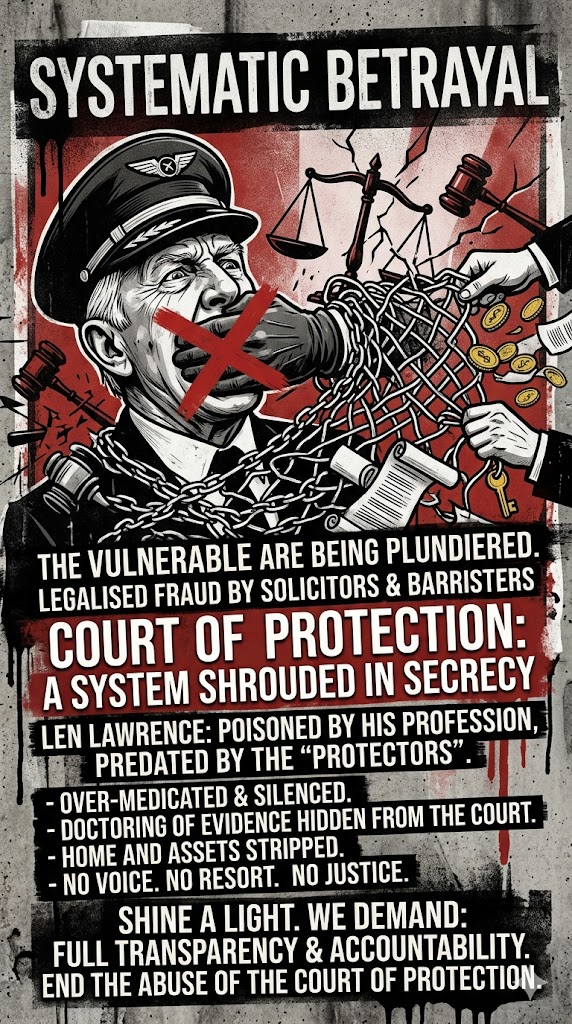
Len was held for more than a year, during which time, to add insult to injury, his assets, savings and home were disposed of illegally by barristers and solicitors without the knowledge of the Court of Protection.
Having lost his home and his marriage the British Airline Pilots’ Association came to his rescue, by-passing the Official Solicitor and referred Len to the Civil Aviation Authority’s psychiatric advisor, Professor Gordon Turnbull FRCP, FRCPsych, RAF (Rtd) who immediately took Len off the drugs and arranged for him to receive long overdue specialist treatment for organophosphate poisoning.
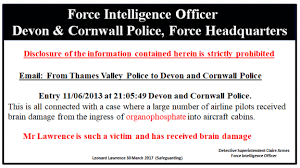
Len Lawrence is clearly a survivor. He has lived through industrial poisonings, multiple losses, corporate and official obstruction and efforts by psychiatrists to suppress and silence him. Not only is he still with us, but he continues to fight for the exposure of cover ups and crooked deals that affect us all.
Further reading – Petition: Stop contaminated cabin air in aircraft
The case of Leonard (Len) Lawrence is a significant and disturbing account involving allegations of professional negligence, asset stripping, and the failure of protective systems within the UK legal framework.
While your query mentions a “pilot,” it is important to clarify that this refers to Len Lawrence’s profession as a commercial pilot, rather than a specific “pilot scheme” (though his case is often cited by transparency advocates who push for reforms like the Court of Protection Transparency Pilot).
The Case of Captain Len Lawrence
Len Lawrence was a British Aerospace pilot who suffered from Aerotoxic Syndrome due to “fume events” (toxic oil fumes entering the cockpit). His legal and medical battle began when his physical neurological damage was allegedly misdiagnosed as mental illness.
Key Allegations of Fraud and Mismanagement:
-
The Official Solicitor & Capacity: Lawrence was placed under the guardianship of the Official Solicitor (who acts for people deemed to lack mental capacity). He alleges he was over-medicated with psychiatric drugs to the point where he actually did lose the capacity to understand legal proceedings.
-
Asset Stripping: While under the “protection” of the Official Solicitor and various solicitors and barristers, Lawrence’s home, savings, and personal assets were sold or disposed of. He claims this happened without his informed consent and without the Court of Protection being properly notified of his actual medical status.
-
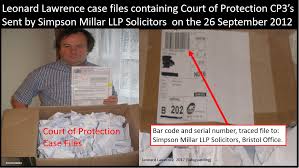
Withholding Evidence: It is alleged that medical certificates (CP3s) and neurological reports—which proved his condition was toxicological/physical rather than psychiatric—were withheld from the Court of Protection by his own legal representatives and the Official Solicitor’s office.
-
Legal Firms Involved: In his public testimonies, Lawrence has named firms such as Ratcliffe Duce & Gammer and Simpson Millar LLP, alleging they failed to disclose crucial box files to the Court of Appeal and the Court of Protection.
Context: Fraud in the Court of Protection
The Court of Protection (CoP) deals with the affairs of the most vulnerable. Allegations of “fraud” by professionals in this field usually center on:
-
Excessive Fees: Solicitors charging the estate of a vulnerable person (P) exorbitant fees for minimal work.
-
Conflict of Interest: Acting in a way that benefits the firm’s billing rather than the “Best Interests” of the client.
-
Lack of Transparency: Because CoP hearings were traditionally private, critics argue it created a “closed shop” environment where misconduct by barristers and solicitors could go unnoticed.
The “Transparency Pilot” Connection
The Court of Protection Transparency Pilot (which began in 2016 and was made permanent) was introduced partly because of cases like Len Lawrence’s. It shifted the default from private hearings to public ones, allowing journalists and the public to attend.
Advocates like Lawrence and various “Justice for P” groups argue that without this public scrutiny, the system remains vulnerable to “legalized” asset stripping under the guise of protection.
Note: If you are seeking to take legal action or are involved in a similar dispute, these allegations are highly complex. You may want to look into the Solicitors Regulation Authority (SRA) or the Legal Ombudsman for formal complaints regarding professional misconduct.
Contact Us
https://corruptionspotlight.co.uk/contact/
Great Websites to follow
https://corruptionspotlight.co.uk/great-websites-to-follow/
Buy Me A Coffee